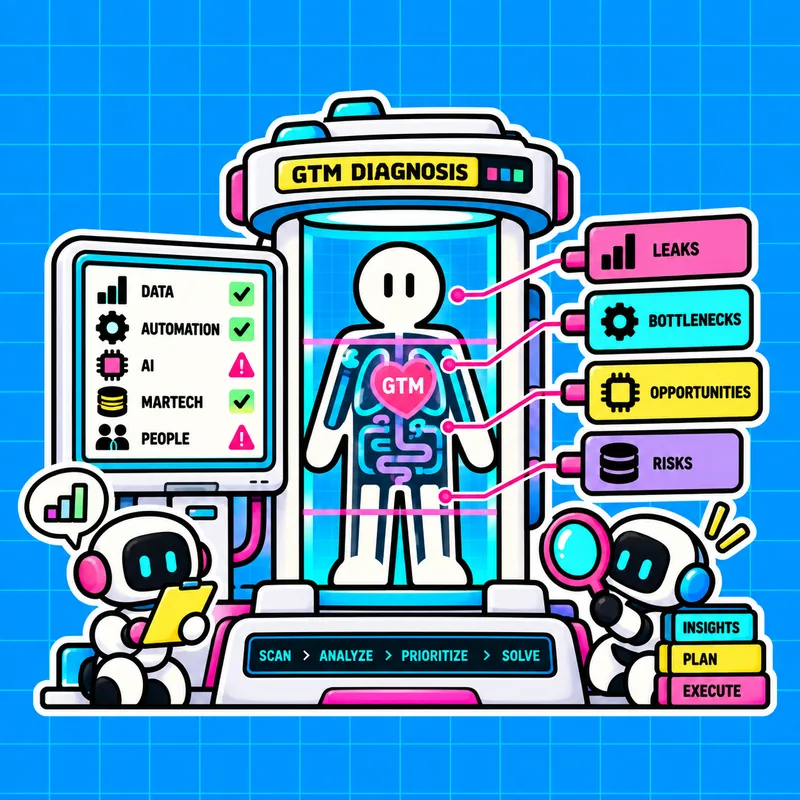
Most companies don't have a lead problem. They have a systems problem: tools that don't talk to each other and a CRM nobody trusts. I connect scattered outbound, enrichment, and AI tools into one governed engine that scores leads and books meetings on its own.
Nothing else works without this. The CRM is where every contact, deal, and interaction lives, the single source of truth that captures the data and defines the customer journey. Get it right, and every layer above it has something solid to stand on.
Sourcing, scoring, enrichment, signals, automation, reporting: none of it means anything on a messy CRM. I build the foundation first, a clean, well-structured data model that captures every interaction and maps the full path from first touch to closed deal, across whichever platform the business runs on.
More pipeline usually means more people chasing it. Here it doesn't: the volume comes from the channels, the qualifying comes from the system.
Each tool sends data its own way: different fields, different formats, its own logic. Left unmanaged, they turn the CRM into a mess of mismatched records. The sourcing system maps every one into a single structure, so a lead from Apollo and a lead from Meta land as the same clean, comparable record, attributed to its true source and ready to work.
A thousand leads all look the same in a list. Scored, they sort themselves: who to call now, who to nurture, who to skip. The team stops guessing and starts prioritizing.
Every lead gets two scores from models built on real conversion data: one for how well it fits the ICP, one for how engaged it is. Together they place each lead on a map, so the team knows exactly what to do with it, and what to skip.
And because priority is set here, the next layer only enriches the leads worth enriching, no wasted credits on contacts that won't convert.
A rep who knows the company, the role, and the buying signal closes better than one working from a name and an email. Enrichment gives them that context, running only on the leads the score already flagged as worth it.
Company size, role, tech stack, buying signals: the details that turn a generic outreach into a message that lands. The rep opens the record and already knows the angle, so the first conversation starts warm instead of starting over.
Timing wins deals. The system watches for intent, an email click, a pricing-page visit, a buying signal, and pings the rep the moment it happens, not three days later when it's cold.
Internal HubSpot activity like email clicks and web visits, combined with intent data from Amplemarket and Clay, gets read for behavior that actually matters to the business. When a lead moves, the rep gets a notification, and reaches out while the interest is still warm.
The repetitive work that eats a rep's day, moving stages, assigning owners, cleaning data, sending contracts, runs on its own. One AI-driven flow replaced a manual first-touch role entirely.
Anyone can wire up a workflow. The hard part is running dozens without them silently breaking. Every automation here has an owner, a criticality tier, and documentation, so the system keeps working whether or not I'm in the room. That's the difference between automating tasks and running an automation system.
Every layer before this one fed the CRM clean, structured data. That's what makes these reports worth reading: they measure the real customer journey, so the team can see where deals stall and fix it, not guess.
A dashboard is only as honest as the data under it. On a governed CRM, every stage, source, and conversion rate reflects reality, so leadership can spot the leak in the funnel, double down on the channel that converts, and steer with numbers they trust.